Announcing culture on the street: the tradition of posters in Madrid
From artisanal beginnings to professionalization
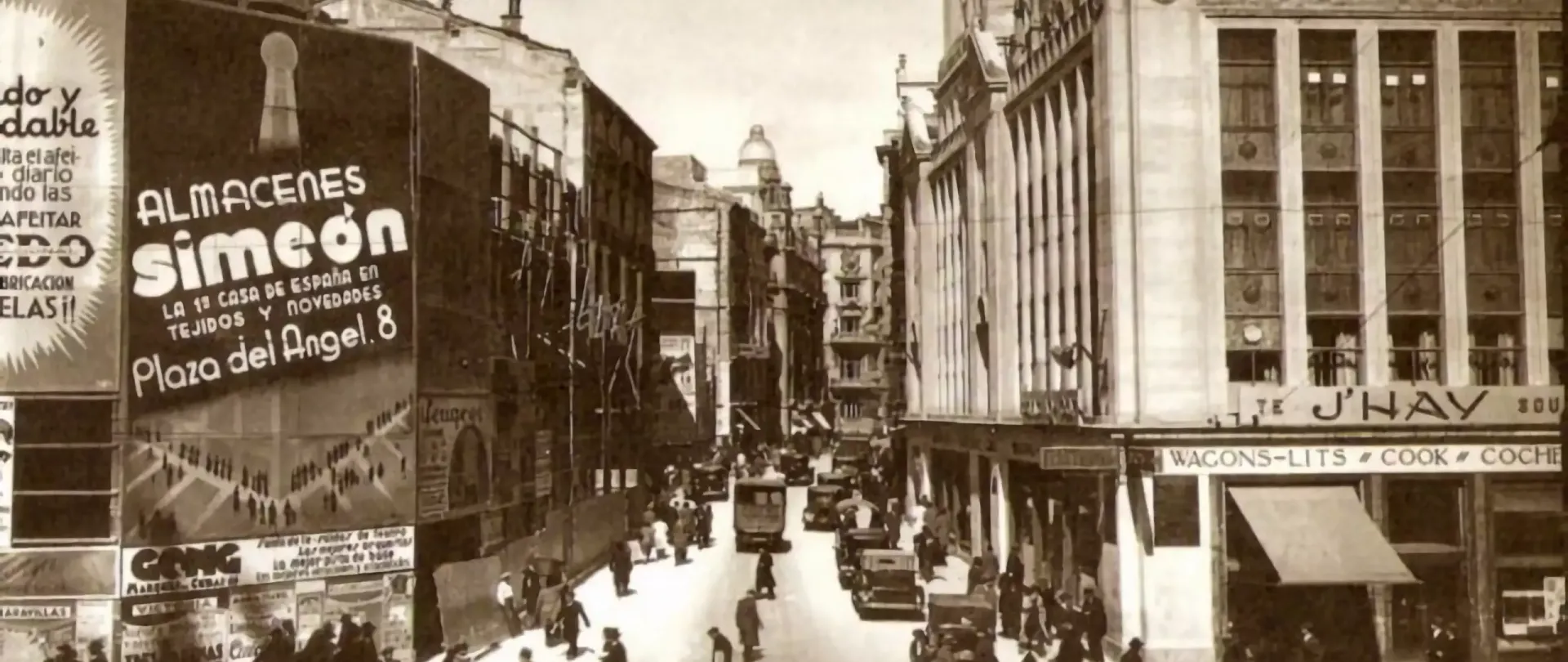
The custom of pasting posters in Madrid dates back to the early 20th century, when the city was beginning its transformation into a great metropolis. At that time, Madrid had just over 500,000 inhabitants and was immersed in a process of growth and industrialization. However, the possibilities for mass communication were still limited, since neither radio nor television had yet become popular.
It was then that poster pasting in Madrid by hand became established as one of the most effective ways to promote the various cultural events, from plays and concerts to cockfights and bullfights. The first posters were usually handwritten announcements or those printed in an artisanal manner on paper. Volunteers were responsible for pasting them by hand on the lampposts, street corners and walls of the city to publicize the activities among the residents of Madrid.

Over the years, the tradition became more professional. As the city grew in size and importance, the first print shops emerged that were dedicated to the semi-industrial production of posters. The designs gained in quality and complexity thanks to new printing techniques. However, the artisanal spirit of the origins was maintained, with groups of people distributing the posters by hand throughout the Madrid region.
The consolidation of a sign of identity
Throughout the 20th century, poster pasting became consolidated as a true sign of identity of the capital of Spain. As Madrid became a great metropolis, the custom of announcing cultural events through these street advertisements spread to all neighborhoods.
The lampposts, street corners and walls of the city filled with posters of the most varied designs and colors, announcing everything from plays to modern music concerts. Each poster was a small piece of history that survived for weeks on the urban furniture, leaving a record of the intense cultural life of the city.
The evolution of supports and designs ran parallel to the technological development of the following decades. From silkscreen printing, they moved to offset printing and, later, to the first digital color prints. Posters ceased to be simple handwritten advertisements and became authentic works of urban art. However, the essence remained: promoting Madrid’s culture through street advertisements.
Regulations to govern the placement of posters
Despite being a deeply rooted tradition among cultural promoters and groups, not everyone looked favorably on poster pasting. Some residents and associations considered it an element that dirtied the aesthetics of the city’s streets and facades.
There were also complaints about the excess of posters piled up in some areas, which gave rise to a disorderly appearance. For this reason, at the end of the 20th century, the Madrid City Council began to establish a series of regulations to regulate their pasting. Limits were set regarding sizes, permitted supports and removal deadlines.
Likewise, sanctions were established for those who violated municipal ordinances. The objective was to preserve the tradition without it negatively affecting the image of the capital. Even so, the custom remained deeply rooted among cultural groups.
More than a promotional function
Despite their promotional function, over time Madrid’s street posters ended up becoming something more than simple advertisements. They became authentic samples of the city’s cultural pulse, reflecting through their designs and messages the artistic trends of each era.
Each poster became part, albeit ephemerally, of the Madrilenian urban landscape. They were a way to know at a glance which shows were being performed at any given moment, from the classics of the Golden Age to the artistic avant-gardes. Even when they disappeared, they had left their mark as witnesses to the recent history of the capital.
Poster pasting in Madrid today
Despite the emergence of new digital communication channels, the tradition of street posters survives in Madrid. More than a century after its beginnings, it continues to fulfill its function of promoting the city’s intense cultural life. That is why cultural promoters and associations continue to bet on this tool, which combines effectiveness and low cost.
Although municipal regulations have professionalized its pasting, they have also been relaxed to allow its use by non-profit groups. Despite criticism from some, street posters are part of Madrid’s cultural and identity heritage. A tradition that, more than a century after its beginnings, survives thanks to its ability to promote culture on the street.